Google Ads4 min read

Optimizing your Google Ads account for taxi rides: strategies and tips to boost your conversions

Today, optimizing a Google Ads campaign for taxi services is essential to generate rides and maximize profitability. Albert Lanne, senior Google Ads consultant, shares his methods and tips to boost the performance of a Google Ads account…

By Antoine Dubois

Optimizing your Google Ads account for taxi rides: strategies and tips to boost your conversions

Today, optimizing a Google Ads campaign for taxi services is essential to generate rides and maximize profitability. Albert Lanne, senior Google Ads consultant, shares his methods and tips to boost the performance of a Google Ads account dedicated to taxi rides.

The initial strategy: targeted campaigns for taxis

To get off to a good start, it is best to create two main campaigns:

  • A standard acquisition campaign targeting very specific keywords such as “Taxi Vert”, “Taxi Bruxelles” or “Taxi Paris”, with a reasonable daily budget of around €25.
  • A campaign dedicated to rides to strategic locations, especially the airport, where demand is high.

With a Google Ads offer giving you €400 in credit once you have spent €400, you can test these campaigns effectively over a month, with a total budget of around €800. This trial phase is crucial to collect data and adjust the strategy.

Why responsive ads beat call-only ads

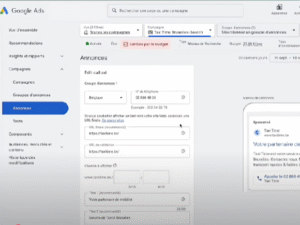
Albert stresses that you should avoid call-only ads, which are too limited in content and flexibility. Responsive ads, on the other hand, which let you combine up to 15 different headlines, 4 descriptions and 4 long headlines, offer more optimization possibilities and better performance.

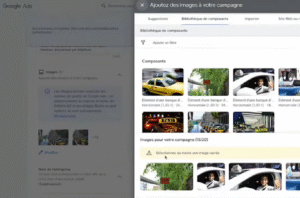
To increase visual impact, he recommends adding at least 20 images to the asset library, favoring close-up photos that grab attention quickly. Adding a logo or brand-related icons also strengthens recognition and users' trust.
Keyword analysis and relevant targeting

Keyword selection is a key step:
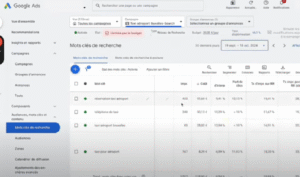
  • Focus on precise transactional keywords such as “airport taxi”, “book a taxi” or “taxi now” to maximize the conversion rate.
  • Limit the number of broad match keywords to between 5 and 10 to keep control over delivery and avoid wasting budget.

Precise targeting ensures that the ads reach potential customers who are genuinely interested in the service.

Managing negative keywords: reducing unqualified clicks

Albert insists on the importance of a long negative keyword list, with more than 500 terms, to exclude irrelevant clicks. For example:

  • Words related to free or cheaper alternatives (bus, shuttles, carpooling).
  • Job searches in the taxi industry.
  • Free content or other unrelated services.

This rigorous exclusion helps limit a high rate of fraudulent clicks, a common problem in this sector.

Conversion tracking and performance analysis

Tracking results is essential to adjust the campaign:
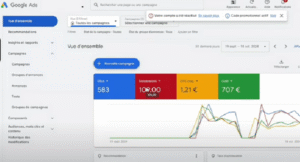
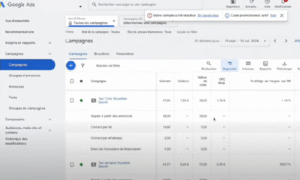
  • To go into more detail, you can segment at the campaign level
  • Add Google Ads conversion tags to accurately measure the phone calls, WhatsApp contacts and booking forms generated.

Remember to check the invalid click rate, which Google Ads often underestimates. It reflects how relevant your ads are and helps you identify optimization opportunities for your campaigns.

This detailed analysis helps optimize ad spend and increase return on investment.

Optimizing Quality Score and user experience

Quality Score is a decisive factor in a campaign's success:

  • Make landing pages more relevant by creating content dedicated to the targeted keywords, for example a specific “Airport taxi” page.
  • Offer high-quality, well-structured content to make conversion easier.

It is important to aim for 10/10: a good Quality Score lowers your cost per click and increases your ads' visibility.

Managing budget and impression share

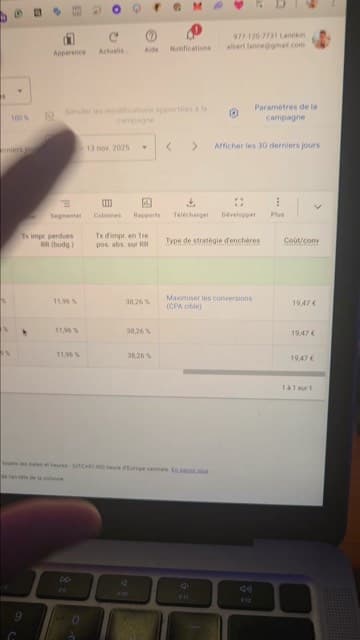
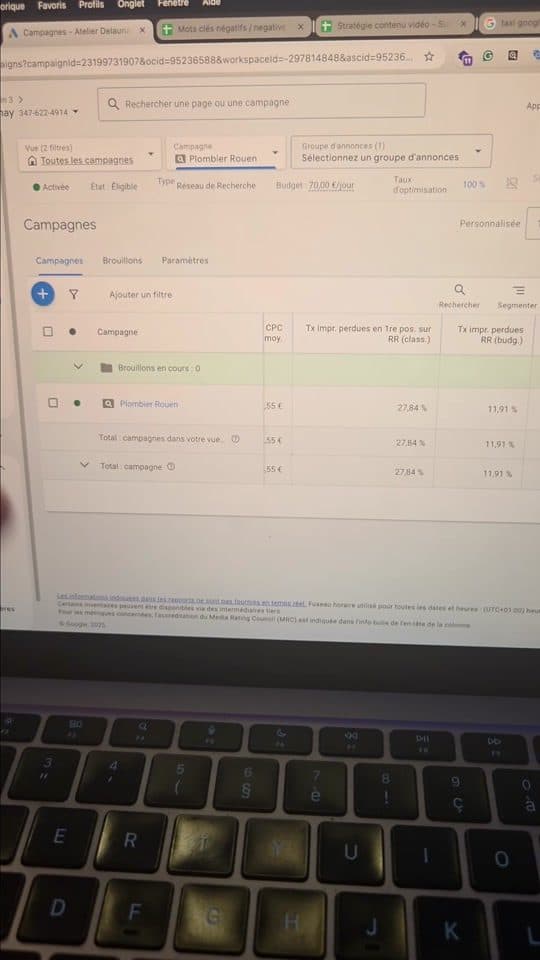
Albert recommends monitoring lost impression share, which can be explained by:

  • Insufficient Ad Rank (bids too low or poor quality).
  • A budget that is too low.

To reduce lost impressions, increase the budget gradually while keeping an eye on profitability. Aiming for a high position (top 4 or absolute top position) significantly improves your chances of conversion.

Tips and tools for advanced optimization

  • Analyze search terms regularly to exclude irrelevant keywords and keep refining the campaign.
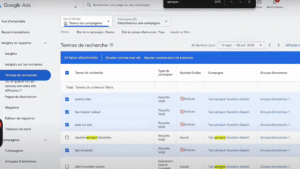
These tools help you stay one step ahead of the competition and make your campaigns more efficient.

Key takeaways

  • Build Google Ads campaigns targeting precise transactional keywords.
  • Favor responsive ads rich in headlines and descriptions.
  • Use a comprehensive negative keyword list to avoid unqualified clicks.
  • Set up detailed conversion tracking.
  • Optimize the landing page to improve Quality Score.
  • Manage the budget wisely by monitoring impression share.
  • Automate and continuously refine campaigns with specialized tools.

FAQ: Google Ads optimization for taxi services

Q1: Why avoid call-only ads in Google Ads?
Call-only ads are limited in content and offer little flexibility. Responsive ads let you test several headlines and descriptions, which improves performance.

Q2: How many keywords should I target?
It is best to limit yourself to 5 to 10 broad match transactional keywords to keep control over delivery and avoid wasted spend.

Q3: How do I deal with unqualified clicks?
Create a very long negative keyword list (more than 500 words), including terms related to free alternatives, jobs or irrelevant content.

Q4: How important is Quality Score?
Quality Score affects your cost per click and your ad position. A good score improves visibility and lowers costs.

Q5: Which tools can help optimize a taxi campaign?
Automation scripts to detect fraudulent clicks and regular search terms reports are essential to refine the campaign.

Further reading:

I optimize a Google Ads account for a taxi company (video in French)

The video case study: Google Ads optimization for a taxi company.

Hand over your campaigns: Google Ads expert for taxis, or Google Ads for private drivers and ride-hailing services.

On video · @albertdelannkin

Taxi and private hire drivers: step out of the shadows on Google

For a taxi or private hire driver who can't be found on Google, the problem is positioning. A well-targeted Google Ads campaign puts you back in front of the customers looking for you.

Transcript

3 case studies and TikTok videos

The work, shown on screen

All case studies

Google Ads, on video

  • 1:17

    Plumber in Rouen: a €19 cost per conversion on Google Ads

    @lannkin

    Transcript

    Transcript

  • 1:10

    Google Ads for plumbers: the negative keywords that change everything

    @albertdelannkin

    Transcript

    Transcript

  • 1:24

    Fraudulent clicks on Google Ads: how to recover your budget

    @albertdelannkin

    Transcript

    Transcript

  • 2:22

    Broad match in Google Ads: danger or best option?

    @albertdelannkin

    Transcript

    Transcript

  • 2:19

    Lowering your CPC in Google Ads: keywords, ad and landing page

    @albertdelannkin

    Transcript

    Transcript

  • 1:30

    Google Ads: CPA or CPC, which bid strategy should you choose

    @albertdelannkin

    Transcript

    Transcript

  • 0:56

    Do several PMax campaigns in parallel push up your CPC?

    @albertdelannkin

    Transcript

    Transcript

  • 1:22

    An electrician client shows us a job he landed through Google Ads

    @lannkin

    Transcript

    Transcript

  • 1:31

    E-commerce case study: a profitable Performance Max campaign

    @albertdelannkin

    Transcript

    Transcript

Services

All services →

Need help?

Let's work together on your project

Reply within 24 hours on weekdays, with a tailored proposal.

+33 6 17 03 03 08

Free, no commitment · Reply within 24 hours

Keep reading

More Google Ads articles